Career transition
The traditional model of a professional career based on a linear and stable trajectory, developed in one or a few organizations, is increasingly questioned.
Among the “environment” factors that are shaking the predominant labor model in recent decades, are: economic instability, collaborative organizational models, the exponential multiplication of the number of start-ups, or how technologies have facilitated remote work, expanding the geographical scope of professional relationships, both for those looking for work and for employers.
At the same time, the human factor is in the process of reflection and questioning about the work-person relationship. More and more people are deciding to design a more fulfilling, more rewarding and stimulating working life.
More and more people, in response to volatile and unpredictable employment conditions, choose at a given point in their professional life to design their own trajectory through value creation. Those are people more likely to take responsibility for their professional future, who are willing to leave the organization where they work, if they consider that this is the best option.
To be successful in this process, a good level of self-knowledge and adaptability must be displayed. It is necessary for the person to draw a structure and a direction for his professional career, even if this direction is far from being a straight line: it can include radical changes of orientation, retraining activities and the commitment to continuous training to achieve “success”.
The traditional model of a professional career based on a linear and stable trajectory, developed in one or a few organizations, is increasingly questioned.
Among the “environment“ factors that are shaking the predominant labor model in recent decades, are: economic instability, collaborative organizational models, the exponential multiplication of the number of start-ups, or how technologies have facilitated remote work, expanding the geographical scope of professional relationships, both for those looking for work and for employers.
At the same time, the human factor is in the process of reflection and questioning about the work-person relationship. More and more people are deciding to design a more fulfilling, more rewarding and stimulating working life.
More and more people, in response to volatile and unpredictable employment conditions, choose at a given point in their professional life to design their own trajectory through value creation. Those are people more likely to take responsibility for their professional future, who are willing to leave the organization where they work, if they consider that this is the best option.
To be successful in this process, a good level of self-knowledge and adaptability must be displayed. It is necessary for the person to draw a structure and a direction for his professional career, even if this direction is far from being a straight line: it can include radical changes of orientation, retraining activities and the commitment to continuous training to achieve “success“.
In Horizons, we understand that this process can be initiated basically for two reasons, either by a need or by a desire, a series of difficulties and blockages in various situations:
01.
Given the desire and/or the need to give a new orientation to your career.
03.
In times of stagnation or difficulty, negatively affecting your life.
02.
In situations of professional development, if you are looking to evolve and grow.
04.
In the face of states of imbalance or misalignment between personal and professional life.
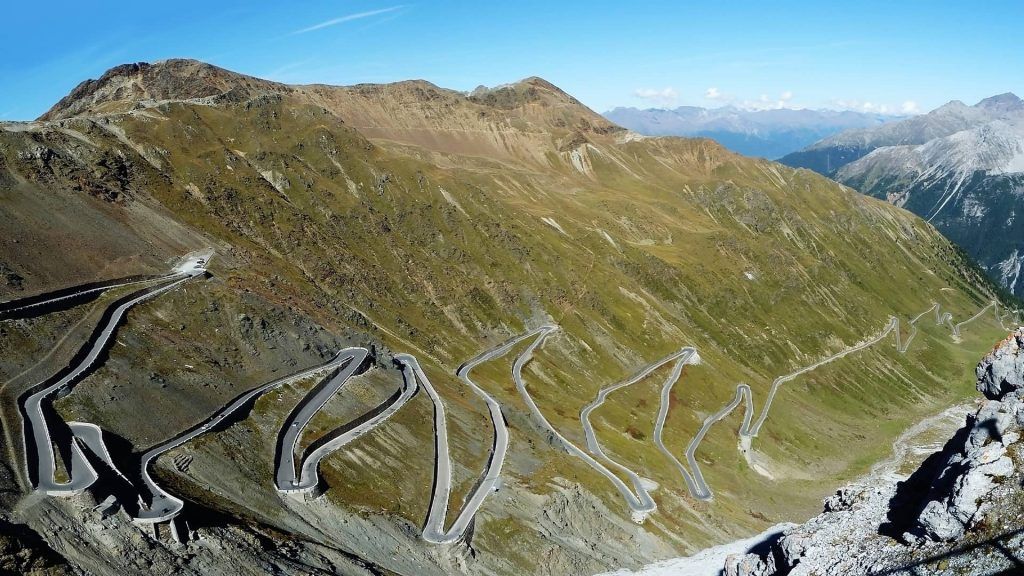
"Walker there is no way; you make your way by walking".
Changing direction means managing uncertainty
Our transition program accompanies and facilitates the client during a complicated time such as change. The ultimate goal is for the client to lead his or her own transition process.
To this end, from Horizons we propose and develop a two-dimensional approach, based on two basic pillars: Person and Process.
To achieve this personal leadership and be able to assume the development of career in an environment of uncertainty, it is necessary to develop better self-knowledge. In addition, we will facilitate a better understanding and awareness of the reality of the client, using the techniques, methodologies and exercises appropriate for it.
Subsequently, we will collaborate in clarifying the aspirations and defining the desired objectives. We will try to co-create a motivating future, and prepare to make the transition with confidence, in a structured way and be able to achieve the desired goal.